Watering
How Often to Water a Jade Plant
How often to water a jade plant: water deeply only when the soil is fully dry, every 2 to 3 weeks, far less in winter. Read the leaves, not the calendar.
Disclosure: The Plant Pages is reader-supported. Some pages include ads and affiliate links, and we may earn a commission from qualifying purchases, at no extra cost to you.
If you’ve killed a jade plant before, watering was almost certainly the culprit, and almost certainly because you gave it too much. A jade (Crassula ovata) is a succulent that stores water in its thick leaves and stems, so it wants long dry spells, not steady moisture. Quick answer: water a jade plant deeply only when the soil has dried out completely, which usually works out to about every 2 to 3 weeks in spring and summer and far less, often every 4 to 6 weeks, in winter. Soak it thoroughly, let every drop drain away, then leave it alone until the soil is bone-dry again. Below I’ll walk through how often to water a jade plant, how to read what the plant is telling you, and the watering mistakes that quietly do it in.
Jade plant watering at a glance
Here’s the whole approach in one table. The sections that follow explain the reasoning behind each line.
| Question | The short answer |
|---|---|
| How often | Only when soil is fully dry, roughly every 2 to 3 weeks in summer |
| In winter | Much less, often every 4 to 6 weeks |
| How much | A deep soak until water runs from the drainage holes |
| Method | Soak-and-dry, then let it drain completely |
| Thirsty signs | Slightly wrinkled, soft, less plump leaves |
| Overwatered signs | Yellow, mushy, dropping leaves; wet soil |
| Best soil | Gritty, fast-draining cactus or succulent mix |
| Best pot | Terracotta with drainage holes |
Why a jade plant drinks the way it does
Jade plants come from the dry regions of South Africa, where rain arrives in bursts and then the ground bakes for weeks. The plant adapted by storing water inside its plump leaves and trunk, then living off those reserves through the dry stretches. That biology is the key to watering it correctly indoors.
Because a jade carries its own water supply, it doesn’t need or want the regular, even moisture that thirstier houseplants enjoy. What it wants is the cycle it evolved with: a heavy drink, then a long dry period while it lives off what it stored. Trying to keep the soil “a little moist” works against the plant. Damp soil with no air in it is exactly the condition that rots succulent roots.
So the honest answer to how often to water a jade plant isn’t a number on a calendar. It’s a condition: water when the soil is completely dry, and not before. The numbers in this guide are useful starting points, but the soil and the leaves always overrule the schedule.
How often to water a jade plant, by season
With that in mind, here are realistic intervals for a jade growing in a typical home. Treat them as a place to start, then adjust to your conditions.
- Spring and summer (active growth): roughly every 2 to 3 weeks. Warmth and longer days speed up growth and water use, so the soil dries faster. In a hot, bright spot it might need water a little more often; in a cooler room, a little less.
- Fall: stretch the gaps as light fades and temperatures drop. The plant’s water use is winding down, and the soil stays damp longer.
- Winter (rest): often every 4 to 6 weeks, sometimes longer. Jade growth slows or stops in the short, dim days, so it sips very little. Overwatering in winter is the single most common way people lose these plants.
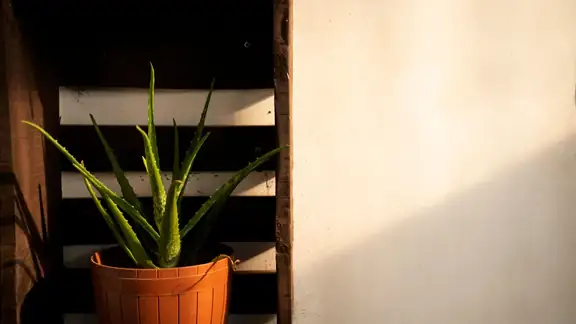
Several things shift these intervals. A small terracotta pot in a sunny window dries out in days; a large plastic pot in a dim corner can stay wet for weeks. Higher temperatures, brighter light, and lower humidity all speed drying, while cool, dim, humid conditions slow it down. This is exactly why checking the soil beats watering on autopilot. The same logic applies to other thick-leaved plants, which is why the watering rhythm for aloe vera, another drought-adapted succulent, looks so similar.
The soak-and-dry method, step by step
The watering technique that suits a jade is called soak-and-dry, and it mirrors the boom-and-bust rainfall the plant evolved with. The idea is simple: when you do water, water thoroughly, then let the soil dry out fully before you water again. Here’s how to do it well.
- Confirm the soil is dry. Push a finger or a wooden chopstick deep into the pot. You want it dry all the way down, not just at the surface. The top inch drying out means nothing on its own, because the reservoir of moisture sits lower around the roots.
- Water deeply. Pour slowly and evenly over the whole surface until water runs freely from the drainage holes. You’re saturating the entire root ball, not just dribbling a little on top.
- Let it drain completely. Give the pot a few minutes to finish draining, then tip out anything that collected in the saucer or cachepot. A jade should never sit in standing water.
- Then wait. Don’t touch the watering can again until the soil has dried out completely. This dry stretch is not neglect; it’s the part of the cycle that keeps the roots healthy.
A quick word on top versus bottom watering, since people ask. Top watering is fine as long as you soak the whole root ball and drain it. Bottom watering, setting the pot in a shallow tray of water for 10 to 20 minutes so it wicks up moisture, also works and wets the roots evenly. Whichever you choose, the rule that matters is the same: saturate, drain, and never leave the plant standing in water.
Reading the leaves: thirsty versus overwatered
Here’s the skill that turns a jade from a plant you worry about into one you barely think about. The leaves are a built-in water gauge, and learning to read them tells you what no schedule can.
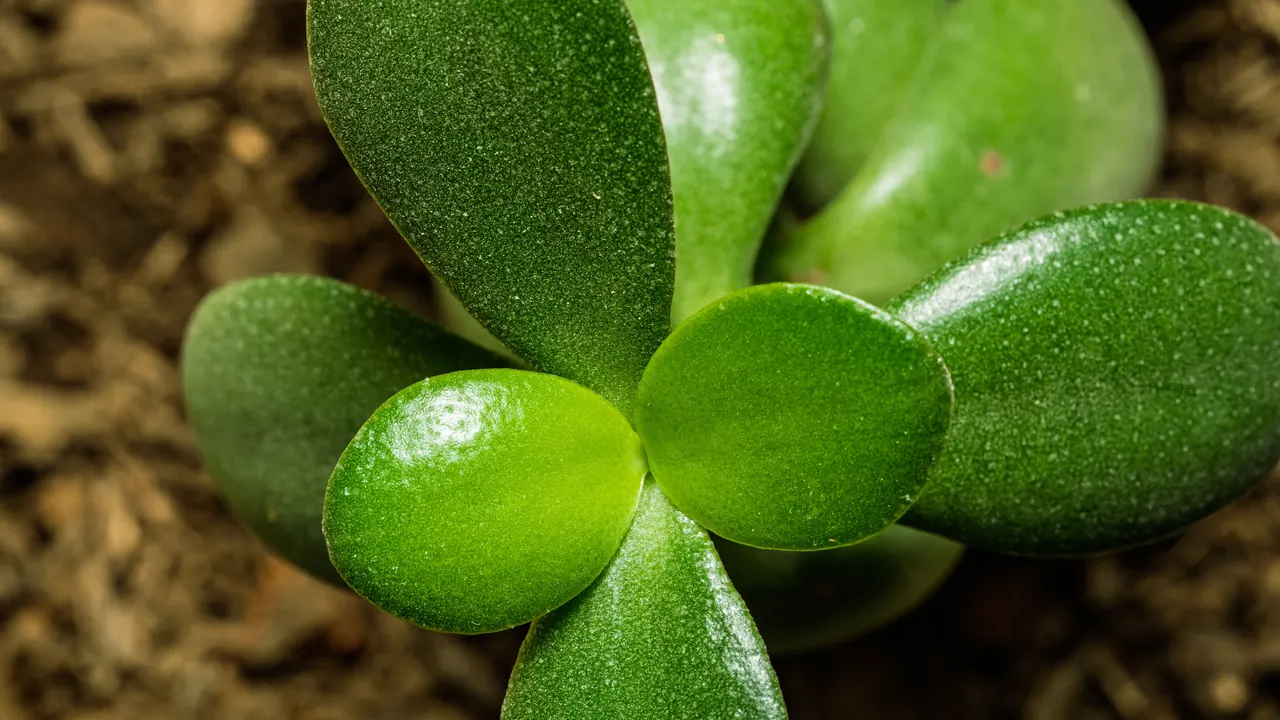
A thirsty jade shows it in the leaves. As the plant draws down its stored water, the leaves lose their taut, glossy plumpness and start to look slightly wrinkled, soft, or a touch deflated. Some lower leaves may also pucker first. None of this is an emergency. It’s simply the plant signaling that its reserves are running low and it’s ready for a deep drink. Water it, and the leaves usually firm up and plump back out within a day or two.
An overwatered jade looks very different, and worse. The leaves turn yellow and translucent, feel soft and mushy rather than firm, and drop off at the lightest touch, sometimes falling on their own. The stem near the soil line may darken or go squishy. Crucially, the soil is still damp when you check. That combination, mushy yellowing leaves plus wet soil, points to roots that have been sitting in moisture too long and have begun to rot.
The trap to watch for: wrinkled, soft leaves can briefly look like the symptoms of advanced overwatering, since a rotting root system can no longer take up water and leaves the plant effectively thirsty. So always check the soil before deciding. Wrinkled leaves with dry soil mean thirst, and the fix is water. Soft or mushy leaves with wet soil mean overwatering, and the fix is to stop watering and let things dry out. The soil is the tiebreaker.
Overwatering: the mistake that kills jades
If there’s one thing to take away from this guide, it’s that a jade is far more likely to die from too much water than too little. A jade that’s underwatered wrinkles, droops, and waits patiently, then recovers fully after a good soak. A jade that’s overwatered rots from the roots up, and by the time the leaves go yellow and mushy the damage is often well underway.
Overwatering rarely means a single generous drink. It usually means watering again before the soil has dried, over and over, so the roots never get the air they need. Common ways it sneaks in:
- Watering on a fixed schedule instead of checking the soil, so the plant gets a drink whether it needs one or not.
- Watering through winter at the summer pace, when the resting plant is barely drinking and the soil stays wet for weeks.
- A pot with no drainage, or a decorative cachepot that traps water around the roots out of sight.
- Heavy, moisture-holding soil that stays soggy long after watering.
If you suspect you’ve overwatered, stop watering immediately and let the soil dry out fully. In a serious case, slide the plant out of its pot and check the roots: healthy roots are firm and pale, while rotted ones are dark, soft, and may smell sour. Trim away the rotted roots with clean scissors, let any mushy spots dry, and repot into fresh dry succulent mix. Then water sparingly while it recovers. When you’re genuinely unsure, lean toward waiting. With a jade, the next watering can almost always afford to wait another few days.
Soil and pot: half the watering battle
How often you water is only part of the story, because the soil and pot decide how long the plant stays wet after each drink. Get these right and correct watering gets much easier; get them wrong and even careful watering can drown the roots.
Soil. A jade needs a gritty, fast-draining mix that dries out quickly and keeps air around the roots. A bagged cactus and succulent mix is the simplest choice. You can improve an ordinary potting mix by cutting it heavily with coarse material like perlite, pumice, or coarse sand, roughly one part grit to two parts mix, so water flows through instead of lingering. Standard potting soil on its own holds far too much moisture for a succulent and is a frequent cause of slow rot.
Pot. Drainage holes are non-negotiable. Without them, water pools at the bottom and the roots sit in it. Terracotta is the ideal material for a jade because the porous clay wicks moisture out of the soil and lets it evaporate through the walls, helping the mix dry faster between waterings, which is exactly what this plant wants. Glazed ceramic or plastic pots work too, but they hold moisture longer, so you’ll need to wait a bit more before each watering. Whatever you use, match the pot size roughly to the plant; an oversized pot holds a large volume of slow-drying soil the small root ball can’t use, which keeps things wet too long. This is the same drainage-first thinking behind watering a money tree, another plant that punishes soggy roots.
Watering a brand-new or freshly repotted jade
Two situations deserve a gentler hand. When you bring a new jade home or repot one, resist the urge to water right away. Repotting always nicks a few roots, and watering into those fresh wounds in damp soil invites rot. Wait several days to a week after repotting before the first watering, which gives small root injuries time to heal over in dry soil.
A jade propagated from a leaf or stem cutting follows similar logic. Let the cut end callus over for a few days before planting, then keep the soil only barely moist while roots form, not wet. Once the cutting is rooted and growing, shift it onto the normal soak-and-dry routine like any established plant.
Tweaking your routine to your home
Because every home is different, the best watering interval is the one you calibrate yourself. Start with the seasonal ranges above, then watch how your particular plant responds and adjust. A few habits make this easy:
- Check before you water, every time. Feel the soil deep in the pot. If there’s any dampness down low, wait.
- Let the leaves confirm it. Slightly wrinkled, softening leaves over dry soil are your green light. Firm, plump leaves mean the plant still has reserves and can wait.
- Note the lag. A heavy pot a week after watering is still holding moisture; a light one has dried out. Lifting the pot becomes a quick, reliable gauge over time.
- Respect the seasons. Ease off sharply as light fades into fall and winter, then pick the pace back up in spring as growth resumes.
Do this for a couple of cycles and you’ll stop counting days entirely. You’ll just glance at the plant, feel the soil, and know.
Signs you’re getting it right
You’ll know your watering rhythm is dialed in when the leaves stay firm, plump, and glossy, gaining a healthy fullness rather than looking shriveled or soft. The soil should go fully dry between waterings rather than staying damp for weeks, and in the warm months you’ll see fresh growth at the tips. A happy, well-watered jade often deepens to a richer green, and plants in bright light may even blush red along the leaf edges. Steady growth, firm leaves, and soil that actually dries out are the three signs that your jade and your watering can are finally on the same page.
The bottom line: a jade plant wants a deep drink only when its soil has dried out completely, roughly every 2 to 3 weeks in the growing season and much less in winter. Soak it, drain it, and then leave it alone. Read the leaves for thirst, keep it in gritty soil and a draining pot, and lean toward watering less rather than more. Master that one cycle and the jade more or less takes care of itself.