Plant-by-Plant Care
How to Care for a Fiddle Leaf Fig
Learn how to care for a fiddle leaf fig: bright light, steady watering, the right window, plus fixes for brown spots, dropping leaves, and low humidity.
Disclosure: The Plant Pages is reader-supported. Some pages include ads and affiliate links, and we may earn a commission from qualifying purchases, at no extra cost to you.
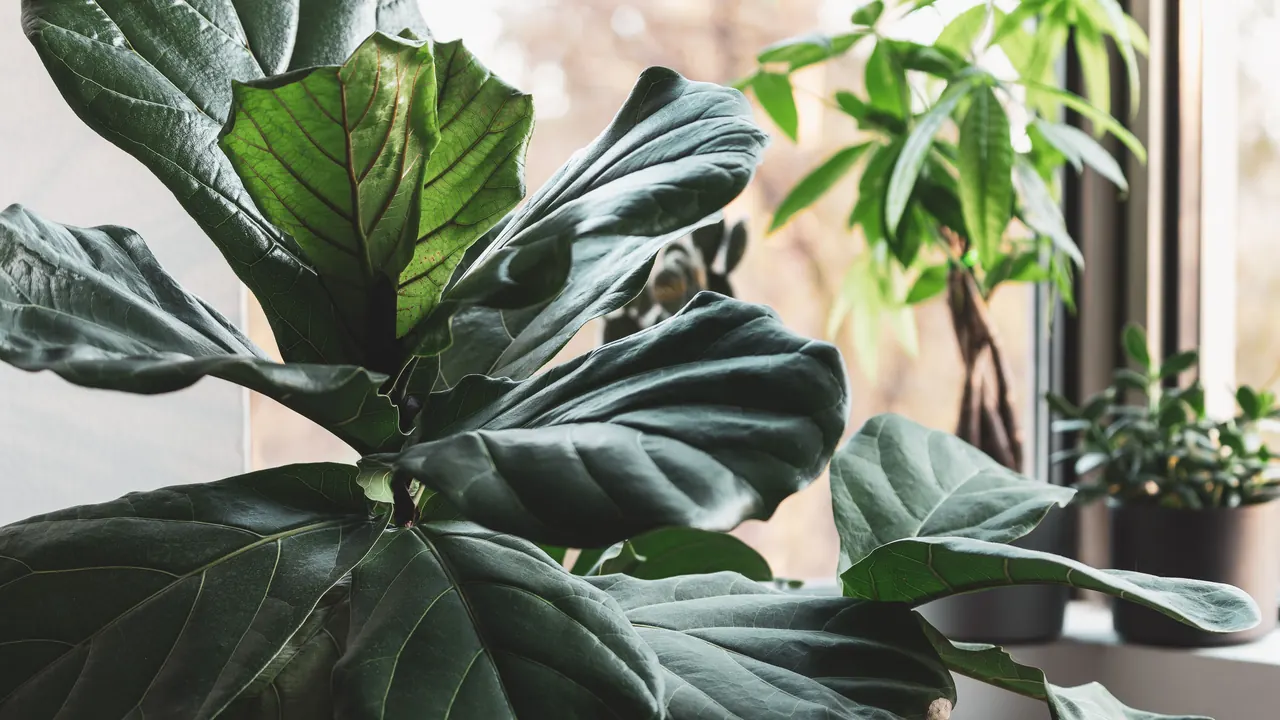
The fiddle leaf fig (Ficus lyrata) has a reputation for being dramatic, but most of its sulking traces back to a few habits you can fix in an afternoon. Quick answer: care for a fiddle leaf fig by giving it lots of bright light in one good window, watering thoroughly only when the top 2 inches of soil dry out, keeping it warm and away from drafts, and resisting the urge to move it around. Get those right and the big violin-shaped leaves stay glossy and green. Below I’ll walk through exactly how to care for a fiddle leaf fig, including how to read brown spots and dropping leaves so you know which problem you actually have.
Fiddle leaf fig care at a glance
Here’s the whole routine in one table. The sections below explain the why behind each line.
| Need | What the fiddle leaf fig wants |
|---|---|
| Light | Lots of bright light, some gentle direct sun is welcome |
| Water | Thoroughly, when the top 2 inches of soil are dry |
| Soil | Loose, well-draining, peat or coir based mix |
| Humidity | Moderate to high (40 to 60%) |
| Temperature | 65 to 75°F (18 to 24°C), no cold drafts |
| Feeding | Diluted houseplant fertilizer, spring and summer |
| Pot | Drainage holes, snug rather than huge |
| Stability | One stable spot, not moved around |
Light: bright, and plenty of it
The fiddle leaf fig is the light-hungry exception among popular houseplants. In its native West African rainforests it grows into a tall tree reaching for the canopy, so a dim corner will never satisfy it. Indoors it wants the brightest spot you can offer, and unlike many tropicals it actually appreciates a few hours of gentle direct sun each day.
The sweet spot is bright light for most of the day with some soft morning or late-afternoon sun. An east-facing window is close to perfect, since it delivers mild sun early and bright light afterward. A south- or west-facing window works well too, but the midday and afternoon rays through that glass can be intense enough to scorch the leaves, so soften them with a sheer curtain.
A simple test: stand where the plant will live and look toward the window. If you can see a wide patch of open sky, the light is probably strong enough. If the view is mostly walls, neighboring buildings, or deep shade, the spot is likely too dark, and the plant will respond with slow growth, small new leaves, and a general lean toward the brightest direction.
Two light cautions are worth keeping in mind. First, harsh, unfiltered direct sun on a hot afternoon can bleach the leaves, leaving pale, washed-out patches that turn brown. This is most likely when a plant grown in lower light gets moved suddenly into blazing sun with no transition. Ease it into stronger light over a couple of weeks rather than all at once. Second, fiddle leaf figs grow toward light, so rotate the pot a quarter turn every week or two to keep the trunk upright and the canopy even instead of lopsided.
If your home is genuinely short on bright windows, this is one houseplant where a grow light earns its keep. A decent LED grow light on a timer for 10 to 12 hours a day keeps the leaves large and the spacing tight, rather than the stretched, sparse look that low light produces.
Watering: consistent, not constant
If light is where the fiddle leaf fig is fussy, watering is where it is unforgiving. The plant wants its soil to dry out partly between drinks, then to be watered thoroughly. What it hates is the extremes: sitting in soggy soil for days, or being left bone-dry for weeks. Consistency is the whole game.
The reliable method:
- Feel the soil. Push a finger in about 2 inches down, roughly to the first knuckle and a bit more.
- If it’s dry at that depth, water thoroughly until it runs from the drainage holes.
- If it still feels damp, wait and check again in a few days.
- Always empty the saucer so the pot never sits in standing water.
Indoors this usually works out to about every 7 to 10 days in the warm months and less often in winter, but the calendar is a guide, not a rule. A large, well-lit plant in summer drinks faster than a small one in a dim room in January. Check the soil rather than watering on a fixed schedule, and you’ll avoid the most common mistake.
That mistake is overwatering. Because the fiddle leaf fig has a substantial root system and dramatic leaves, people assume it’s thirsty and water too often. Soggy soil starves the roots of oxygen and invites root rot, which then shows up in the leaves as dark spots. When you do water, water all the way through until it drains, which moistens the entire root ball and flushes built-up salts, rather than giving frequent little splashes that only wet the surface.
When in doubt, lean slightly toward letting it dry. A fiddle leaf fig recovers from a missed watering far more easily than from waterlogged roots. The single most useful rule to remember about how to care for a fiddle leaf fig is this: do not overwater.
Reading brown spots: the three culprits
Brown spots are the most common question about this plant, and the good news is that the spot itself tells you the cause. Look at where the discoloration starts and what it feels like, and you can usually pin down which of three problems you’re dealing with.
Overwatering and root rot. These spots are dark brown to nearly black, often starting in the center of the leaf or spreading inward from the edges, and they may have a darker, almost wet-looking border. Several leaves can be affected at once, frequently the lower ones first, and the soil tends to stay damp for days. The fix is to ease off watering, confirm the pot drains freely, and in bad cases unpot the plant to check for soft, brown, foul-smelling roots and trim them away. This is the most common cause of brown spots and the one to suspect first.
Underwatering and low humidity. These spots are tan to light brown, dry and crispy to the touch, and they show up at the leaf edges and tips rather than the center. The soil is bone dry, the plant may look slightly droopy, and the browning crumbles when you rub it. The fix is more consistent watering and, if your air is dry, a bit more humidity. The texture is the giveaway: rot is dark and soft, while thirst is pale and crispy.
Sunburn. Bleached, pale patches that fade to tan or brown, usually on the leaves most exposed to a hot window and often in the middle of the leaf where the sun hits hardest. This typically follows a sudden jump in light intensity, such as moving the plant into direct afternoon sun without easing it in. The fix is to diffuse the harshest rays with a sheer curtain or pull the plant back slightly from the glass.
Whatever the cause, existing brown spots won’t heal or turn green again. The goal is to stop new ones from forming. You can trim a badly damaged leaf if you like, but don’t strip off many leaves at once, since the plant needs them to photosynthesize while it recovers.
Dropping leaves: it hates moving
If brown spots are about water and light, dropping leaves are usually about change. Fiddle leaf figs are famously sensitive to having their environment altered, and they protest by shedding leaves. Understanding this one trait prevents a lot of panic.
The classic trigger is relocation. Bring the plant home from the store, move it to a different room, or even shift it a few feet to “a better spot,” and a wave of leaf drop often follows within days. The plant has acclimated to a particular level of light and is reacting to the new one. A few dropped leaves after a move is normal adjustment, not a death sentence. The lesson is to choose a good location and then leave the plant alone to settle in, rather than relocating it whenever it looks slightly unhappy.
Drafts are the other big offender, and they pair badly with this plant’s hatred of change. Cold air from an exterior door, a drafty window in winter, or the dry blast from a heating or cooling vent all stress a fiddle leaf fig and can set off leaf drop. Keep it away from these spots. A consistent, draft-free position with steady warmth does more for leaf retention than any fertilizer or trick.
Watering swings cause shedding too. Letting the soil go from completely dry to soaking wet and back again stresses the roots, and the plant drops leaves in response. This loops back to the consistency point from earlier: a steady watering rhythm keeps leaves on the plant. If your fiddle leaf fig is dropping leaves, run through the checklist of recent changes, did you move it, expose it to a draft, or change how you water, and you’ll usually find the culprit. Its tougher cousin reacts to the same triggers, so if you keep both, our guide on why a rubber plant drops leaves runs the same checklist for Ficus elastica.
Humidity, temperature, and warmth
Fiddle leaf figs come from the tropical lowlands of West Africa, so they prefer moderate to high humidity, roughly 40 to 60 percent. Most homes sit comfortably in that range for much of the year. The exception is winter, when indoor heating dries the air and the leaf edges can turn crispy and brown.
If your air is genuinely dry, a small humidifier running near the plant raises ambient moisture far more effectively than misting, which evaporates within minutes and does little for humidity while leaving leaves damp enough to invite spots. Grouping plants together also nudges local humidity up a little. Wiping the broad leaves with a damp cloth now and then isn’t about humidity, but it clears dust so the plant can actually use the light it’s getting.
On temperature, keep the plant between about 65 and 75°F (18 to 24°C), the comfortable range for most homes. It has no tolerance for cold, so protect it from frost, chilly drafts, and the cold radiating off window glass on winter nights. Avoid placing it directly above or beside a radiator or heating vent as well, since that hot, dry airflow stresses it just as much as cold does. Steady warmth, like steady everything else with this plant, is what keeps it happy.
One good window: getting placement right
Almost everything above converges on a single decision: where you put the plant. Because the fiddle leaf fig wants lots of light, dislikes drafts, and hates being moved, choosing one good window and committing to it solves several problems at once.
Look for a bright window with steady warmth and no drafts. East-facing is ideal for its gentle morning sun and bright afternoon light. A south- or west-facing window works well with a sheer curtain to soften the strongest rays. Avoid placing the plant right in the path of a heating or cooling vent, hard against cold winter glass, or beside a frequently opened exterior door, all of which deliver the temperature swings and drafts this plant can’t stand.
Once you’ve picked the spot, leave the plant there. Resist the temptation to shuffle it around chasing slightly better light or a nicer corner for a photo. The only routine movement it needs is that gentle quarter-turn every week or two to keep it growing straight. A fiddle leaf fig that stays in one bright, warm, draft-free window and gets watered on a consistent rhythm is a fiddle leaf fig that holds onto its leaves and keeps growing.
Soil, pots, and feeding
Because overwatering is the chief risk, your soil and pot do real work. Use a loose, well-draining mix; a standard peat- or coir-based houseplant potting mix amended with perlite keeps air around the roots and lets excess water escape. Choose a pot with drainage holes, and if you love a decorative cachepot, keep the plant in a plastic nursery pot inside it that you can lift out to drain. Don’t jump to a huge container either, since an oversized pot holds a large volume of wet soil the roots can’t use, which stays soggy. Pot up just one size at a time.
Fiddle leaf figs are moderate feeders during the growing season. Feed with a balanced liquid houseplant fertilizer diluted to about half the label strength, roughly once a month in spring and summer, then ease off in fall and stop in winter when growth slows. Less is more: over-fertilizing builds up salts that burn the roots and brown the leaf margins, mimicking the very problems you’re trying to avoid. Feed right after a normal watering rather than onto dry soil, and skip feeding a plant that’s clearly stressed, newly repotted, or sitting in cold, low-light winter conditions.
When you’re getting it right
You’ll know the routine is working when new leaves emerge from the growing tip during spring and summer, the foliage stays a deep, even green with a healthy shine, and the plant holds its leaves rather than shedding them. The soil should dry out over the course of about a week rather than staying wet for many days, which tells you the drainage and watering rhythm are balanced.
Once you’re comfortable keeping a fiddle leaf fig happy, you may catch the houseplant habit and want something with a different personality. If you’d like another statement plant that’s a touch more forgiving, see our guide on how to care for a Monstera plant. And if you want a low-key, beginner-friendly option to round out a bright room, our walkthrough on how to care for a money tree plant is a gentle place to start.
The bottom line: give your fiddle leaf fig lots of bright light in one good window, water thoroughly only when the top 2 inches dry out, keep it warm and out of drafts, and stop moving it around. Read the brown spots to find the real cause, hold a steady routine, and this so-called diva turns out to be far more agreeable than its reputation suggests.