Plant-by-Plant Care
How to Care for a Calathea Plant
How to care for a calathea plant: filtered water, steady humidity, medium indirect light, and even moisture, plus fixes for crispy edges and curling leaves.
Disclosure: The Plant Pages is reader-supported. Some pages include ads and affiliate links, and we may earn a commission from qualifying purchases, at no extra cost to you.
Calatheas have a reputation as the divas of the houseplant world, and it’s mostly earned: they react to small slights with curled, crispy leaves and seem to sulk if anything is off. The good news is that their demands are predictable, and once you meet them the plant rewards you with some of the most striking foliage you can grow indoors. Quick answer: care for a calathea by giving it medium indirect light, watering with filtered or distilled water to keep the soil evenly moist (never soggy), and holding humidity around 50 to 60 percent. Avoid direct sun and hard tap water, and a calathea stays lush. Here’s exactly how to care for a calathea plant, step by step.
Calathea care at a glance
Here’s the whole routine in one table. The sections below explain the why behind each line.
| Need | What the calathea wants |
|---|---|
| Light | Medium to bright indirect light, no direct sun |
| Water | Filtered or distilled, soil kept evenly moist |
| Soil | Light, well-draining mix that still holds moisture |
| Humidity | High, ideally 50 to 60% or more |
| Temperature | 65 to 80°F (18 to 27°C), no cold drafts |
| Feeding | Diluted houseplant fertilizer, spring and summer |
| Pot | Drainage holes, snug rather than oversized |
| Repotting | Every 1 to 2 years, in spring |
Meet the drama queen
It helps to know what you’re working with. The plants we call calatheas are tropical perennials from the rainforests of South America, mostly the Amazon basin, where they grow on the shaded forest floor under a dense canopy. Botanists have reclassified many former Calathea species into the genus Goeppertia, but in shops and care guides the name calathea has stuck, and it covers familiar varieties like Calathea orbifolia, the rattlesnake plant (Calathea lancifolia), and the pinstripe calathea (Calathea ornata).
That rainforest-floor origin explains nearly everything about its temperament. These plants never see harsh sun, the air around them stays humid, and the water that reaches them is rain, not mineral-laden tap water. Replicate those three conditions indoors and the diva calms right down. Fight them and you get the crispy edges and curling leaves the plant is famous for.
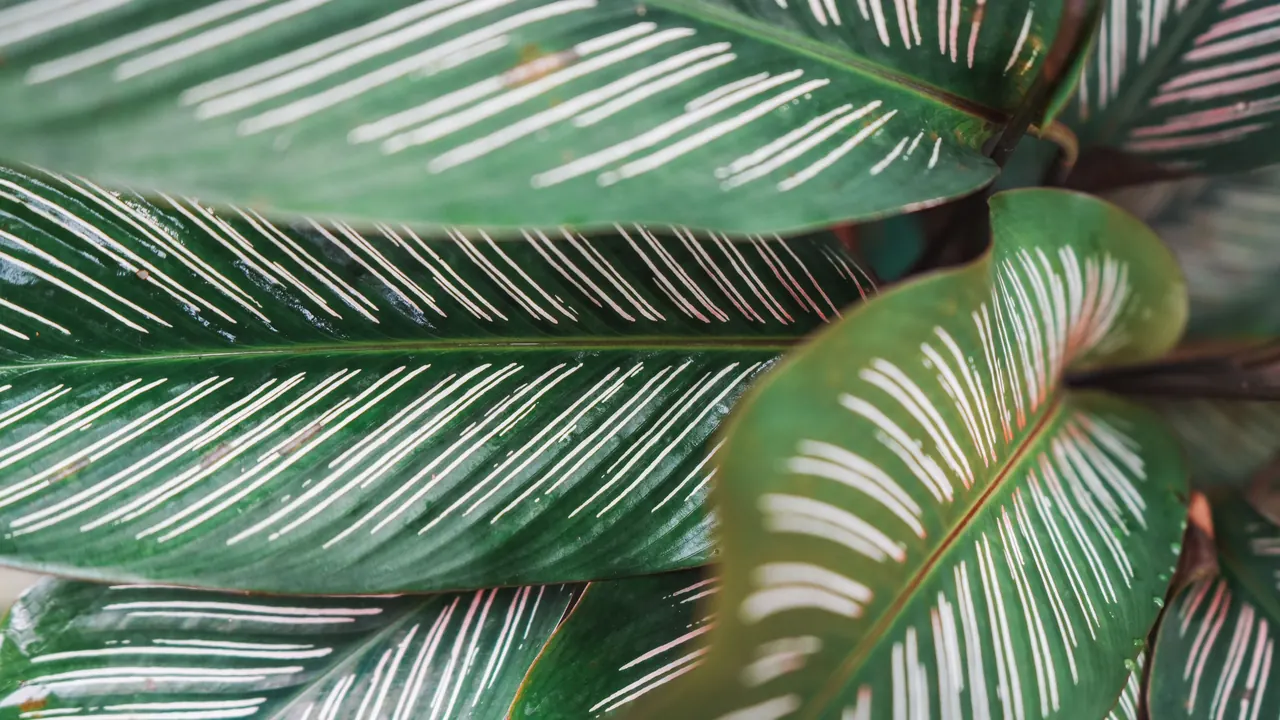
The payoff for the fuss is the foliage. Calathea leaves carry bold patterns: feathered stripes, painterly brushstrokes, and deep purple undersides that flash as the leaves move. And they do move, which brings us to the plant’s most charming habit, covered further down.
Light: medium and indirect, never direct
Because calatheas evolved in dappled shade, they want medium to bright indirect light and nothing stronger. A spot a few feet back from an east-facing window is close to perfect: gentle morning light, no scorching afternoon rays. A north window suits them too. If your only bright window faces south or west, set the plant well back from the glass or filter the light through a sheer curtain.
Direct sun is the mistake to avoid. Even a couple of hours of it can fade those prized markings and leave bleached, scorched patches on the leaves. The patterning that makes a calathea worth growing is the first thing to wash out under too-strong light.
The opposite extreme isn’t great either. In a genuinely dim corner the plant won’t die quickly, but growth slows, the colors go flat, and new leaves come in smaller. Aim for the middle: enough light to read by comfortably during the day, with no beam of sun ever falling on the leaves. Rotate the pot a quarter turn weekly so it grows evenly rather than leaning toward the window.
Watering: filtered water and even moisture
This is where calatheas earn their fussy name, and it’s the part most worth getting right. Two things matter: what you water with, and how consistently you do it.
Start with the water itself. Calatheas are unusually sensitive to the minerals in ordinary tap water. Fluoride, chlorine, and dissolved salts build up in the soil and travel to the leaf tips and edges, where they cause the brown, crispy margins that plague so many calatheas. Letting tap water sit out overnight drives off chlorine, but it does nothing for fluoride or salts, so it’s only a partial fix. The reliable solution is to water with filtered, distilled, or collected rainwater. If you’ve struggled with crispy edges on a calathea before, switching your water alone often turns the plant around.
Now the rhythm. Calatheas like their soil kept evenly moist, not bone-dry and not waterlogged. The practical method:
- Check the top inch of soil with a finger. When it starts to feel dry, it’s time to water.
- Water thoroughly until it runs from the drainage holes, then empty the saucer so the pot never sits in standing water.
- Don’t let the pot dry out completely between waterings the way you might with a succulent or a snake plant, and don’t keep it soaking wet either.
Indoors this often works out to watering every few days to about once a week, but light, pot size, and season all shift the timing, so check the soil rather than relying on the calendar. Lukewarm or room-temperature water is gentler than cold straight from the tap. If judging moisture by feel makes you nervous, an inexpensive moisture meter takes out the guesswork.
The two failure modes pull in opposite directions. Let the soil dry out hard and you’ll see curling, drooping leaves and crispy edges. Keep it soggy and you risk yellowing leaves and root rot. Even moisture, with good drainage underneath, is the target. The calathea’s love of moisture and humidity is something it shares with the peace lily, another tropical that signals thirst dramatically, though the peace lily is far more forgiving about water quality.
Soil and pots: moisture-retentive but draining
Your soil has a delicate job here: hold enough moisture to keep the roots evenly damp, while draining freely enough that they never sit in water. A standard peat- or coir-based houseplant mix lightened with perlite hits that balance well. Some growers add a little orchid bark for extra airiness. The goal is a mix that stays moist but never turns into mud.
Whatever you plant in, the pot needs drainage holes. A decorative cachepot is fine as long as the calathea lives in a nursery pot inside it that you can lift out to drain. Skip oversized containers: a pot much larger than the root ball holds a big volume of wet soil the plant can’t use, which keeps things soggy and invites rot. Pot up just one size at a time.
Humidity: the demand you can’t skip
If light and water are the first two pillars of calathea care, humidity is the third, and it’s the one most homes fall short on. These are rainforest plants, and they want the air around them moist, ideally 50 to 60 percent or higher. Average household air, especially in winter with the heat running, often drops well below that, and dry air is a leading cause of those crispy brown leaf edges.
Here’s the honest part about misting: it’s largely a feel-good ritual. The moisture evaporates within minutes and does almost nothing for ambient humidity, and leaves left wet can develop fungal spots. What actually works:
- A humidifier is the most effective option by far. Running a small one near your calatheas raises real, sustained humidity.
- A pebble tray under the pot (a shallow tray of water and stones, with the pot resting on the stones above the waterline) adds modest local moisture as the water evaporates.
- Grouping plants together creates a slightly more humid pocket of air, since plants release moisture through their leaves.
- A naturally humid room like a bright bathroom or kitchen can suit a calathea nicely.
If you can give a calathea only one thing it doesn’t get by default, make it humidity.
Temperature and drafts
Keep calatheas in the range of 65 to 80°F (18 to 27°C), which lines up with normal indoor comfort. They’re tropical and have no tolerance for cold, so protect them from chilly drafts: cold window panes in winter, exterior doors, and the blast of AC vents can all trigger trouble. The dry, moving air from a heating vent is a double problem, since it chills and dries at once. A sudden cold draft can cause leaf damage or drop, so a stable, draft-free spot keeps the plant much happier.
Feeding: light and seasonal
Calatheas aren’t heavy feeders. During the active growing season in spring and summer, feed with a balanced liquid houseplant fertilizer diluted to about half the label strength, roughly once a month. Ease off in fall and stop in winter, when growth naturally slows.
Restraint matters here for the same reason water quality does. Calatheas are sensitive to mineral and salt buildup, and over-fertilizing leaves excess salts in the soil that burn the roots and brown the leaf edges, compounding the very problem you’re trying to avoid. Always feed right after a normal watering rather than onto dry soil, so the diluted solution spreads evenly instead of concentrating against the roots. If you ever see a white crust forming on the soil surface, flush the pot thoroughly with filtered water to rinse the salts through.
The nightly leaf-praying
Here’s the trait that turns calatheas from finicky to genuinely endearing. Calatheas and their close relatives the marantas (true prayer plants) raise and lower their leaves on a daily rhythm: the foliage spreads open and flat during the day, then folds upward at night as if closing for prayer. You can sometimes hear the leaves rustle faintly as they shift in the evening.
This movement is called nyctinasty, and it’s driven by a small swollen joint at the base of each leaf, the pulvinus, which changes the pressure of water in its cells to angle the leaf up or down in response to light. It’s a normal, healthy behavior, not a sign of stress, and it’s one of the reasons people fall for these plants in the first place.
It’s worth separating this nightly raising and lowering from distress curling. Healthy nyctinasty is a gentle, daily up-and-down that resets each morning. Tight inward curling that persists into the day is the plant complaining, usually about thirst, dry air, or harsh tap water. Learn the difference and your calathea’s leaves become a readable signal of how it’s doing.
A safe choice for pet homes
One genuine bonus: calatheas are non-toxic to cats and dogs. If you’ve avoided some of the more dramatic foliage plants because a curious cat or dog shares your space, calatheas are a worry-free pick on that front. As with any houseplant, a pet that chews the leaves may get a mild upset stomach, so it’s still worth discouraging nibbling, but you won’t face the serious toxicity concerns that come with many popular houseplants. That pet-safe status is one reason calatheas show up so often on lists of family-friendly plants.
Repotting: when and how
Calatheas don’t need frequent repotting, and they actually prefer to be a little snug. Plan on repotting every one to two years, or when you see roots circling the surface or poking out the drainage holes, water running straight through without soaking in, or growth that has stalled despite good care.
When it’s time, repot in spring as the plant heads into active growth, and move up just one pot size, an inch or two wider, with drainage holes. Use the same light, moisture-retentive mix. Ease the root ball out gently, since calathea roots are fairly delicate, and tease apart any tightly circling roots. Set the plant at the same depth it grew before and water it in with filtered water to settle the soil. A little droop or leaf curl in the days after is normal adjustment, so keep conditions steady while it settles. This is also the natural moment to divide a large, healthy calathea: separate a clump with its own roots, pot it up the same way, and keep both especially humid while they recover.
Common problems and quick fixes
Most calathea troubles trace back to water quality, humidity, watering consistency, or light, and reading the symptom usually tells you which. Here’s how to diagnose the common complaints.
Brown, crispy leaf edges. The signature calathea problem, and usually a trio of causes. Hard tap water is the leading suspect: fluoride, chlorine, and salts collect in the leaf margins and burn them, so switch to filtered, distilled, or rainwater. Low humidity is the next culprit, especially in winter, so add a humidifier. And inconsistent watering that swings between bone-dry and soaked browns the edges too, so keep the soil evenly moist. Often it’s a combination, and fixing all three together is what finally clears it.
Curling leaves. Curling that doesn’t relax usually means the plant is thirsty or the air is too dry, sometimes both. Check the soil; if it’s dry, water with filtered water, and raise the humidity around the plant. Remember that some daily leaf movement is normal nyctinasty, not a problem; it’s the persistent, tight inward curl during the day that signals distress.
Yellowing leaves. Yellowing, particularly when several leaves go at once and the soil stays wet, points to overwatering and possibly the start of root rot. Let the top of the soil dry a bit more between waterings, make sure the pot drains freely, and check the roots for softness. A single old lower leaf yellowing now and then is just normal aging.
Fading or washed-out markings. When the bold patterns dull or bleach, the plant is getting too much direct light. Move it out of any direct sun to a spot with bright indirect light and the new growth should come in with better color.
Drooping. Calatheas droop when they’re underwatered or sitting in cold, dry air. Water with filtered water if the soil is dry, move the plant away from drafts and vents, and it should perk back up. Persistent drooping with wet soil points the other way, toward rot.
Tiny pests. Calatheas can attract spider mites, which thrive in dry air, another reason humidity matters. Wipe the leaves, rinse the plant, and treat with insecticidal soap or neem oil if you spot fine webbing or stippling on the foliage.
For a tougher tropical that tolerates more neglect once you’ve built confidence, see our guide to caring for a monstera, a far more forgiving statement plant. For a deeper botanical reference on this group, the Missouri Botanical Garden’s plant finder entry for Calathea is a reliable, citation-worthy source.
Signs you’re getting it right
You’ll know your routine is working when you see flat, vividly patterned leaves that open during the day and fold up at night, new growth emerging from the center during spring and summer, and clean, intact leaf edges with no creeping brown margins. The soil should feel evenly moist most of the time without ever turning soggy, and the plant should look perky rather than curled by midday. Hit those marks and the diva reputation fades fast.
The bottom line: give your calathea medium indirect light away from direct sun, water it with filtered or distilled water to keep the soil evenly moist, and surround it with humid air. Get those three right and the rest is easy. The plant repays the effort with foliage few houseplants can match, and with that quiet nightly habit of folding its leaves up to rest.