Plant-by-Plant Care
How to Care for a Money Tree Plant: A Beginner Guide
Care for a money tree plant the easy way: light, watering, soil, humidity, pruning, repotting, the braided trunk, and fixes for yellowing and leaf drop.
Disclosure: The Plant Pages is reader-supported. Some pages include ads and affiliate links, and we may earn a commission from qualifying purchases, at no extra cost to you.
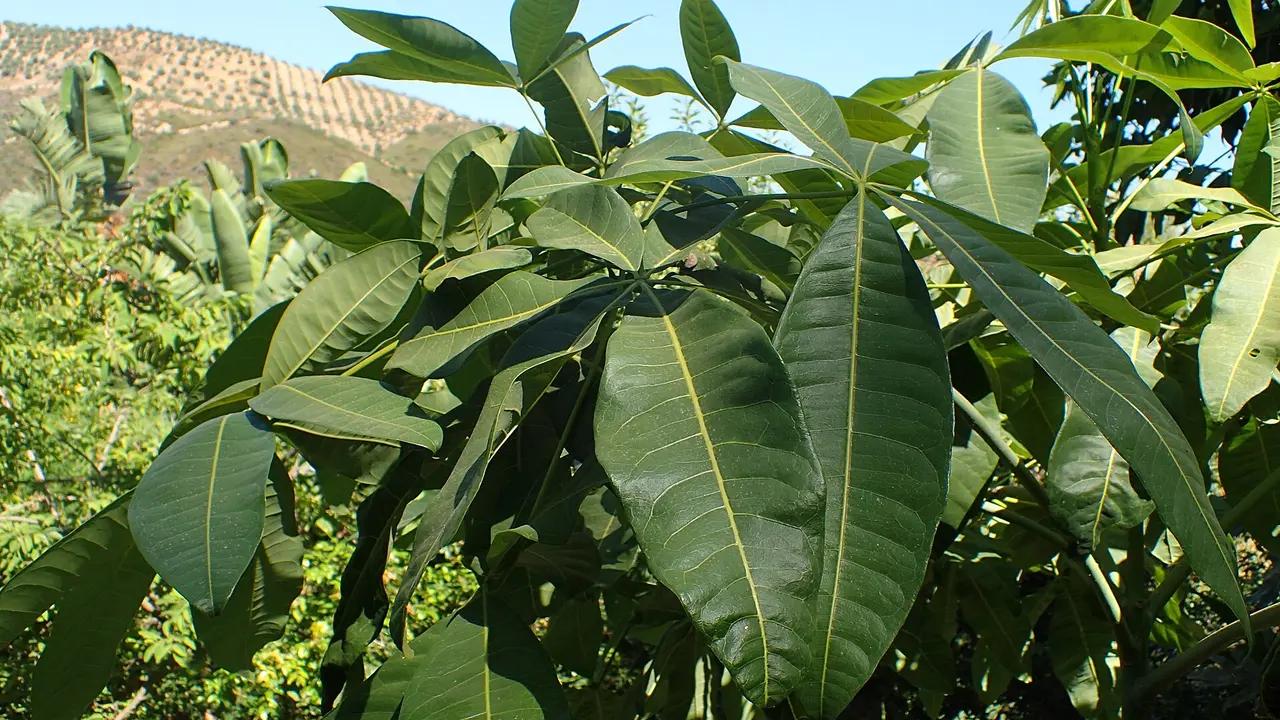
If you just brought home a braided money tree and you’re worried about keeping it alive, relax: this is one of the more forgiving houseplants once you understand its few firm preferences. Quick answer: care for a money tree (Pachira aquatica) by giving it bright indirect light, watering only when the top 2 to 3 inches of soil are dry, planting it in fast-draining soil, and feeding lightly during spring and summer. Avoid the single biggest killer, overwatering, and your tree will reward you with glossy, hand-shaped leaves for years. Below I’ll walk through exactly how to care for a money tree plant, step by step.
Money tree care at a glance
Here’s the whole routine in one table. The sections below explain the why behind each line.
| Need | What the money tree wants |
|---|---|
| Light | Bright, indirect light most of the day |
| Water | When top 2 to 3 inches of soil are dry |
| Soil | Loose, fast-draining, peat or coir based mix |
| Humidity | Average to slightly high (40 to 60%) |
| Temperature | 65 to 80°F (18 to 27°C), no cold drafts |
| Feeding | Diluted houseplant fertilizer, spring and summer |
| Pot | Drainage holes, snug rather than huge |
| Repotting | Every 2 to 3 years |
Light: bright but indirect
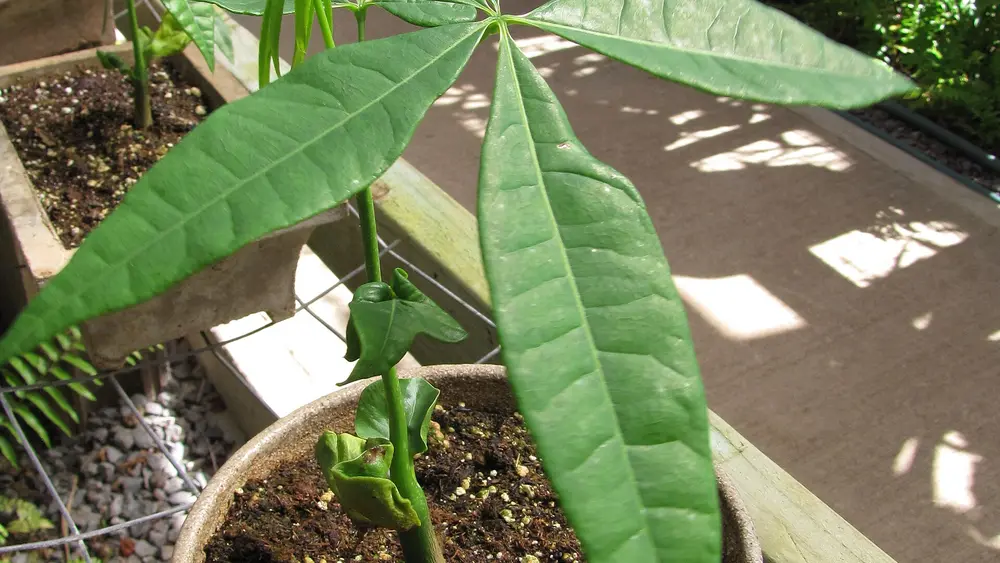
Money trees evolved as understory trees in Central and South American wetlands, so they’re used to plenty of light filtered through a canopy. Indoors, that translates to a bright spot near an east-facing window, or a south- or west-facing one set a few feet back or behind a sheer curtain. They handle some gentle morning sun happily.
What they don’t love is harsh, direct midday sun beating on the leaves, which can bleach or scorch them. They also dislike deep shade; in a dim corner the stems stretch, the spacing between leaves widens, and growth thins out.
A simple test: if you can read comfortably in that spot during the day without a lamp, there’s probably enough light. Rotate the pot a quarter turn each week so the canopy grows evenly instead of leaning toward the glass.
A note on placement that trips people up: a few feet back from a bright window usually beats pressing the plant against the glass. Up close, a south- or west-facing pane can deliver hours of intense, direct sun that fades the leaves, and in winter the cold radiating off the glass can chill the foliage overnight. If that sunny window is your only bright spot, a sheer curtain diffuses the harshest rays without starving the plant. North-facing rooms and windowless interiors are usually too dim for steady growth; there, a basic LED grow light on a timer for 10 to 12 hours a day keeps the tree compact and the new leaves full-sized rather than small and far apart.
Watering: the part that matters most
If you remember one thing about how to care for a money tree plant, make it this. Despite the “aquatica” in its name, a potted money tree is far more likely to die from too much water than too little. Soggy soil suffocates the roots and invites root rot.
The reliable method:
- Feel the soil. Push a finger in to the second knuckle, roughly 2 to 3 inches down.
- If it’s dry at that depth, water thoroughly until it runs from the drainage holes.
- If it still feels damp, wait and check again in a few days.
- Always empty the saucer so the pot never sits in standing water.
Indoors this usually works out to about once a week in summer and every 10 to 14 days in winter, but the calendar is a guide, not a rule. Light, pot size, and season all shift the timing, so check the soil rather than watering on a fixed schedule. If you’re nervous about judging moisture by feel, an inexpensive moisture meter takes the guesswork out, and our deeper guide on how often to water a money tree walks through how light, season, and pot size shift the interval.
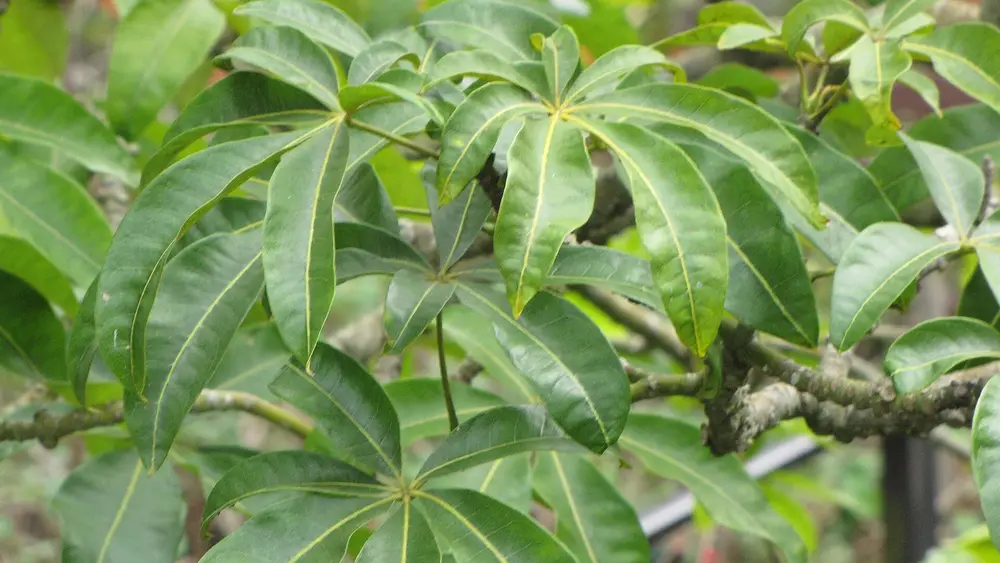
The classic overwatering warning signs are yellowing leaves, a soft or mushy lower trunk, and a sour smell from the soil. Underwatering instead shows up as crispy brown leaf edges and drooping, with bone-dry soil. When in doubt, lean toward underwatering: this plant bounces back from a missed drink far more easily than from waterlogged roots.
Soil and pots: drainage is everything
Because overwatering is the main risk, your soil and pot do half the work of keeping the plant healthy. Use a loose, fast-draining mix. A standard peat- or coir-based houseplant potting mix amended with a few handfuls of perlite works beautifully and keeps air around the roots.
Choose a pot with drainage holes, full stop. A decorative cachepot is fine as long as the plant lives in a plastic nursery pot inside it that you can lift out to drain. Avoid jumping to a huge container, too: an oversized pot holds a large volume of wet soil the small root ball can’t use, which keeps things soggy. Pot up just one size at a time.
Humidity, temperature, and whether to mist
Money trees appreciate average to slightly elevated humidity, roughly 40 to 60%, which suits most homes. In a very dry room, especially in winter with the heat running, the leaf tips may brown.
Here’s where I’ll save you some effort: misting is largely a feel-good ritual. The moisture evaporates in minutes and does almost nothing for ambient humidity, and leaves left wet can develop fungal spots. If your air is genuinely dry, a pebble tray under the pot or a small humidifier nearby does far more real good.
On temperature, keep it between 65 and 80°F (18 to 27°C) and away from cold window panes, exterior doors, and the dry blast of heating or AC vents. Money trees are tropical and have no tolerance for frost, so a chilly draft can trigger a wave of leaf drop.
Fertilizing: light and seasonal
Money trees aren’t heavy feeders. During the active growing season in spring and summer, feed with a balanced liquid houseplant fertilizer diluted to about half the label strength, roughly once a month. Ease off in fall and stop in winter when growth naturally slows.
Less is more here. Over-fertilizing builds up salts that burn the roots and brown the leaf margins. If you ever see a white crust on the soil surface, flush the pot with plain water to rinse the excess through.
Two small habits make feeding safer. Never fertilize bone-dry soil; feed right after a normal watering so the diluted solution spreads evenly instead of concentrating against dry roots. And skip feeding a plant that’s clearly stressed, newly repotted, or sitting in cold, low-light winter conditions. Fertilizer is for a plant that’s actively growing, not a pick-me-up for a struggling one, and pushing nutrients on a dormant tree just leaves salts behind in the soil.
The braided trunk: what it is and how to handle it
That signature braid isn’t natural; growers weave several young, flexible Pachira seedlings together while the stems are soft, and the trunks gradually fuse as they thicken. It’s purely decorative and doesn’t affect the plant’s health.
A few things worth knowing:
- Don’t unbraid a mature trunk. The stems have grown together, and forcing them apart will snap them.
- You can guide new growth. As fresh green shoots lengthen at the top, gently continue the braid and tie it loosely with soft twine or a plant tie. Never cinch it tight enough to bite into the stem.
- One stem may lag or fail. Because a braid is several plants, occasionally one trunk weakens. As long as the others are firm and green, the plant is fine.
If a trunk ever feels soft or hollow, that’s usually rot working up from overwatered roots, not a braiding problem, so revisit your watering before anything else.
Pruning and shaping
Money trees take well to pruning, and a little shaping keeps the canopy full instead of top-heavy. The best time is early in the growing season, spring through midsummer, when the plant has the energy to push fresh growth from where you cut. Avoid hard pruning in late fall and winter, when recovery is slow.
Use clean, sharp scissors or snips, and always cut just above a node, the small bump where a leaf or branch meets the stem, because that’s where new shoots emerge. A few practical aims:
- Encourage bushiness. Pinching or trimming the growing tips makes the plant branch out below the cut, filling in a leggy crown.
- Balance the shape. If the canopy leans or one side outgrows the other, shorten the longer stems to even it up.
- Clean up. Remove yellowed, damaged, or dead leaves at any time of year; that’s tidying, not true pruning, and it never hurts the plant.
To keep the braid itself going, fold each new soft green shoot into the weave as it lengthens and re-tie the top loosely. Don’t try to braid woody, stiffened stems; only the young, pliable growth bends safely.
Repotting: when and how
Plan on repotting every two to three years, but let the plant, not the calendar, make the call. Signs it has outgrown its pot include roots circling the surface or poking out the drainage holes, water running straight through without soaking in, soil that dries out within a day or two, and slowed growth despite good care. A tree that’s slightly snug actually stays more manageable in size, so there’s no rush to size up a happy plant.
When it’s time, repot in spring and move up just one pot size, an inch or two wider, with drainage holes. Refresh the same loose, fast-draining mix you’d use for any money tree. Ease the root ball out, gently tease apart any tightly circling roots, and trim away anything dark, mushy, or foul-smelling, which is rot you want gone before it spreads. Set the plant at the same depth it grew before; burying the trunk junction invites rot.
The braid needs a careful hand here. Support the woven trunks as one unit rather than tugging a single stem, and keep the soil line where it was so you don’t bury the base of the braid. After repotting, water once to settle the soil, then hold off on fertilizer for about a month while new roots establish. A little leaf drop in the following week or two is normal adjustment, not a sign you did something wrong.
Common problems and quick fixes
Most money tree troubles trace back to watering, light, or air, and reading the symptom tells you which one. Here’s how to diagnose the usual complaints.
Yellowing leaves. Overwatering is the most common cause by far, especially when several leaves yellow at once and the lower trunk feels soft. Soggy roots can’t take up oxygen, and yellowing is the early warning before rot sets in. Let the soil dry further between drinks, confirm the pot drains freely, and check the trunk and roots for softness. Occasional yellowing of a single old lower leaf, by contrast, is just normal aging. For the full symptom-by-symptom diagnosis, see our guide on why money tree leaves turn yellow.
Leaf drop. A few lower leaves dropping after you bring the plant home, repot it, or move it to a new spot is normal adjustment to changed conditions. A heavier, faster drop usually means stress: a sudden change in light or temperature, a cold draft from a door or vent, or, again, overwatering and the start of root rot. Steady its environment, keep it out of drafts, and check the soil and trunk before assuming the worst.
Brown, crispy tips. This trio of causes is worth knowing apart. Low humidity is the classic culprit, especially in winter heat. Inconsistent watering, swinging between bone-dry and soaked, also browns the edges. And mineral buildup matters more than people expect: fluoride and chlorine in tap water can accumulate and burn the leaf tips over time. Letting tap water sit out overnight drives off chlorine, but fluoride doesn’t evaporate, so for fluoride you’ll need filtered, distilled, or rainwater. Either way, steadier watering and a touch more humidity help too.
Leggy, stretched growth. Long bare stems with leaves spaced far apart and a thin, reaching look mean too little light. Move the plant to a brighter spot, rotate it weekly so it doesn’t lean, and prune the leggy tips in spring to encourage fuller branching lower down.
Tiny black flies in the soil. Those are fungus gnats, which thrive in chronically damp topsoil, another nudge to water less. Letting the top inch dry out, adding yellow sticky traps, and treating with a BTI product such as mosquito bits will clear them; here’s our full walkthrough on how to deal with fungus gnats.
For a deeper reference on this species and its growing conditions, the Missouri Botanical Garden’s plant finder entry for Pachira aquatica is a reliable, citation-worthy source.
Signs you’re getting it right
You’ll know your routine is working when you see firm, upright trunks, deep green leaves with a bit of shine, and new growth pushing from the top during spring and summer. The soil should dry out within a week or so of watering rather than staying wet for many days, which tells you the drainage and watering rhythm are balanced.
Propagation and going further
Once you’re comfortable keeping a money tree alive, you may want to propagate it from stem cuttings taken in the growing season; they can root in water or moist soil, though they’re slower and fussier than many beginner plants. If you’d rather start with something nearly unkillable to build confidence, try propagating an even tougher plant, the snake plant first.
The bottom line: give your money tree bright indirect light, water only when the top few inches dry out, keep it in well-draining soil with a pot that drains, feed lightly in the warm months, and resist the urge to fuss. Master the watering and the rest is easy.