Pests & Disease
How to Get Rid of Mealybugs on Houseplants
How to get rid of mealybugs on houseplants for good: isolate, spot-treat with rubbing alcohol, then follow up with neem oil weekly to catch every crawler.
Disclosure: The Plant Pages is reader-supported. Some pages include ads and affiliate links, and we may earn a commission from qualifying purchases, at no extra cost to you.
You spot a little fluff of white cotton tucked where a leaf meets the stem, brush it off, and a few days later there are five more. That is the maddening thing about mealybugs: they hide, they multiply, and one quick wipe almost never finishes them. Quick answer: to get rid of mealybugs on houseplants, isolate the plant immediately, dab every visible bug with a cotton swab dipped in 70% isopropyl alcohol to kill it on contact, wipe the whole plant down, then spray with neem oil or insecticidal soap once a week for several weeks to catch the crawlers that keep hatching. Persistence across multiple rounds is what actually wins, since a single treatment rarely gets them all.
What mealybugs look like (and why they’re easy to miss)
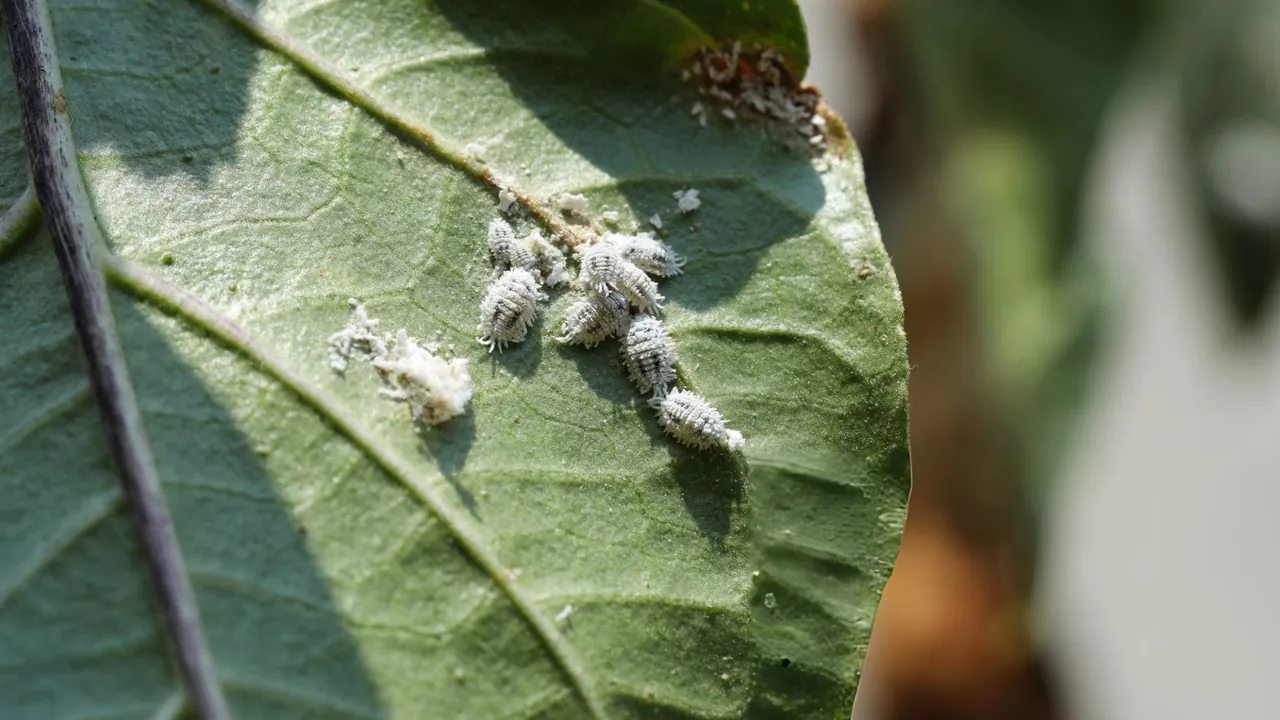
Mealybugs are small, soft-bodied sap-sucking insects, and the adults look like tiny tufts of white cotton or specks of waxy lint. The fuzz is a powdery wax coating they secrete, which is exactly what makes them tricky: it repels water and many sprays, and it camouflages them against light-colored stems and leaf veins.
They cluster in protected spots rather than out in the open. Look for them in leaf joints (where a leaf or stem branches off), along stems, in the crevices of new growth, on leaf undersides, and tucked down where leaves wrap around the central stem. On plants with dense growth or tightly furled new leaves, they can hide for weeks before you notice. Some species also live below the soil line on the roots, which I’ll cover further down.
Up close, an adult mealybug is oval, segmented, and a few millimeters long, often with short waxy filaments around the edge of its body that make it look slightly fringed. The youngest mealybugs, called crawlers, are much smaller, paler, and barely waxed, and they are the mobile stage that spreads to new growth and new plants. Because the crawlers are so small and the adults blend in, an infestation usually looks small right up until it suddenly does not.
The damage they cause
Mealybugs feed by piercing plant tissue and drinking the sap. A light infestation may do little visible harm, but as the colony grows, that constant sap loss starts to show.
The common symptoms are:
- Yellowing leaves, often starting on the leaves nearest the feeding clusters.
- Stunted, weak, or distorted new growth, since the bugs love tender young tissue and rob it of sap.
- Sticky honeydew, a clear sugary excretion that coats leaves and drips onto surfaces, leaves, or the windowsill below.
- Black sooty mold, a dark fungal film that grows on the honeydew. The mold does not feed on the plant, but a heavy coating blocks light and looks awful.
- Leaf drop and overall decline in a bad, long-running infestation.
Ants are another tell. They farm mealybugs for that honeydew and will defend them from predators, so a trail of ants on a houseplant is worth a closer look. If you see honeydew or sooty mold but no obvious bugs, check the hidden crevices and leaf undersides carefully, because the colony is there somewhere.
Step one: isolate the plant right now
Before you treat anything, move the affected plant away from your other plants. This is the single most important first step, and it is easy to skip when you are eager to start spot-treating.
Mealybug crawlers move between touching leaves and can be carried short distances, so a plant sitting in a crowded shelf is a launching pad for the rest of your collection. Set the infested plant in a separate room if you can, or at minimum well apart from any other greenery, and keep it isolated until you have gone a few weeks with no new bugs. While you are at it, check the plants that were sitting right next to it, since they may already have early hitchhikers you have not noticed yet.
Step two: spot-treat with rubbing alcohol
This is the workhorse treatment, and it is wonderfully simple. Take a cotton swab, dip it in 70% isopropyl alcohol (ordinary drugstore rubbing alcohol), and touch it directly to each mealybug you can see.
The alcohol works in two ways: it dissolves the protective waxy coating that normally shields the bug, and it kills the mealybug on contact. You will often see the white tuft collapse and the bug turn translucent or brown as it dies. Work methodically over the whole plant, going crevice by crevice and checking leaf undersides, leaf joints, and the base of new growth. For tight spots a swab cannot reach, a cotton pad or a small soft brush dipped in alcohol works too.
A few practical notes:
- 70% concentration is the standard choice. It is effective and evaporates readily. Higher percentages are not necessarily better for this job.
- Test a leaf first if your plant has delicate or fuzzy foliage. Most common houseplants tolerate dabbed alcohol fine, but a quick spot test on one leaf, checked a day later, avoids surprises on a sensitive plant.
- Avoid soaking the plant in direct sun. Treat in indirect light so the combination of alcohol and intense sun does not stress the leaves.
After you have hit every visible bug, wipe the plant down. A cloth or paper towel dampened with water (or a weak alcohol-and-water mix) removes the dead bugs, leftover wax, honeydew, and any sooty mold film. Cleaning the plant also makes it far easier to spot survivors and new arrivals on your next inspection.
Step three: follow up weekly with neem oil or insecticidal soap
Here is the part people skip, and it is why mealybugs come back. Even a thorough alcohol pass rarely kills every egg and every hidden crawler. Mealybugs lay eggs in cottony sacs tucked into crevices, and those eggs hatch over the following days and weeks. If you stop after one treatment, the survivors quietly rebuild the colony.
So treat the alcohol pass as round one, then follow up on a schedule. Once a week, spray the whole plant with either neem oil or insecticidal soap, making sure to coat the leaf undersides, stems, and crevices where the bugs hide.
- Neem oil is a plant-derived oil that smothers soft-bodied insects and disrupts the development of younger stages. Mix it according to the product’s label directions (it usually needs an emulsifier or a drop of mild soap to blend with water), and apply it out of direct sun to avoid leaf burn. It works gradually rather than instantly.
- Insecticidal soap is a specially formulated soap spray that kills soft-bodied pests on contact by breaking down their outer surface. Use a product labeled as insecticidal soap rather than improvising with dish detergent, which can damage foliage. Like alcohol, it only works where it actually lands, so thorough coverage matters.
Keep up the weekly sprays for several weeks, generally at least three to four, even once the plant looks clean. The goal is to keep catching each new batch of crawlers as it hatches, until the whole reproductive cycle is broken. Between sprays, keep dabbing any individual bug you spot with an alcohol swab. This combination, contact-killing the adults you can see plus a sustained spray program against the crawlers you cannot, is what finally clears an infestation.
Don’t forget the roots
If a plant keeps getting reinfested no matter how carefully you treat the leaves and stems, suspect root mealybugs. These are a soil-dwelling relative that feed on the roots and hide below the surface, so they survive every spray aimed at the foliage.
The telltale signs are a plant that declines (yellowing, wilting, poor growth) without an obvious cause above the soil, sometimes with white, waxy, cottony patches visible on the inner pot wall or on the root ball. To check, slide the plant out of its pot and inspect the roots and the soil against the pot. If you see those white cottony specks among the roots, you have root mealybugs.
Dealing with them takes more work than the leaf kind. Gently remove as much of the old infested soil from the roots as you can, rinse the root ball under water to wash bugs away, trim off badly damaged roots, and repot into fresh soil in a clean (or new) pot. Whether it is worth saving a heavily infested, declining plant is a judgment call; sometimes the kinder move is to discard it before it becomes a reservoir that reinfects everything else. If the plant is special to you, take a clean, bug-free cutting to propagate as insurance before you commit to the rescue.
Why persistence is the whole game
I want to underline this because it is the difference between success and an endless low-grade infestation. Mealybugs are beatable with cheap, simple tools, but only if you commit to repeated rounds. One alcohol pass kills the bugs you saw that day. It does nothing for the eggs about to hatch, the crawlers hiding in a furled leaf, or the colony quietly living on the roots.
Treat the first cleanup as the start of a multi-week campaign, not a one-and-done fix. Inspect the plant every few days. Spot-kill anything you find with alcohol, keep the weekly neem or soap sprays going, and only declare victory after you have gone two to three weeks seeing no new bugs at all. It is tedious, but it is reliable, and it beats throwing the plant out.
How to keep mealybugs from coming back
Once you have won, a little routine prevention keeps you from doing it all again.
- Quarantine every new plant. This is the big one. New plants from a shop, a swap, or a friend are the most common way mealybugs enter a home. Keep any newcomer separate from your collection for at least a couple of weeks and inspect it closely (including leaf undersides and the soil surface) before it joins the others.
- Inspect regularly. When you water, take a few seconds to glance at leaf joints, new growth, and leaf undersides. Catching three bugs is a five-minute fix; catching three hundred is a three-week campaign.
- Wipe down and clean as you go. Removing dust and the occasional dead leaf makes pests easier to spot and gives them fewer places to hide.
- Don’t over-fertilize. Lush, soft, nitrogen-pushed new growth is exactly what sap-suckers prefer. Feeding at sensible rates produces sturdier growth that is a bit less inviting.
- Watch the plants that had it. A previously infested plant is the most likely place for a comeback, so keep a closer eye on it for a couple of months after you think you are done.
When it’s more than mealybugs
Mealybugs rarely travel alone in a stressed collection, and the symptoms overlap with other common houseplant pests, so it is worth confirming what you are actually dealing with. Fine webbing and stippled, speckled leaves point to spider mites instead, which call for a slightly different approach you can read about in our guide to getting rid of spider mites on houseplants. Tiny dark flies hovering over the soil are not mealybugs at all but a soil-moisture problem, covered in our walkthrough on getting rid of fungus gnats on houseplants. Identifying the pest correctly saves you from spraying the wrong treatment for weeks.
For a reliable reference on mealybug biology and management, the University of California IPM page on mealybugs is a solid, citation-worthy source.
The bottom line
Mealybugs look intimidating because they hide and come back, but the playbook is simple and the supplies are cheap. Isolate the plant, kill the bugs you can see with 70% rubbing alcohol on a cotton swab, wipe the plant clean, and then commit to weekly neem oil or insecticidal soap sprays for several weeks to catch the crawlers as they hatch. Check the roots if the problem keeps returning, and quarantine new plants so it does not start again. Win the war of attrition and your plant will bounce back.