Propagation
How to Propagate String of Pearls
How to propagate string of pearls the reliable way: snip 4 to 5 inch strands, callus the cuts, lay them on gritty soil, and root new pearls in 2 to 3 weeks.
Disclosure: The Plant Pages is reader-supported. Some pages include ads and affiliate links, and we may earn a commission from qualifying purchases, at no extra cost to you.
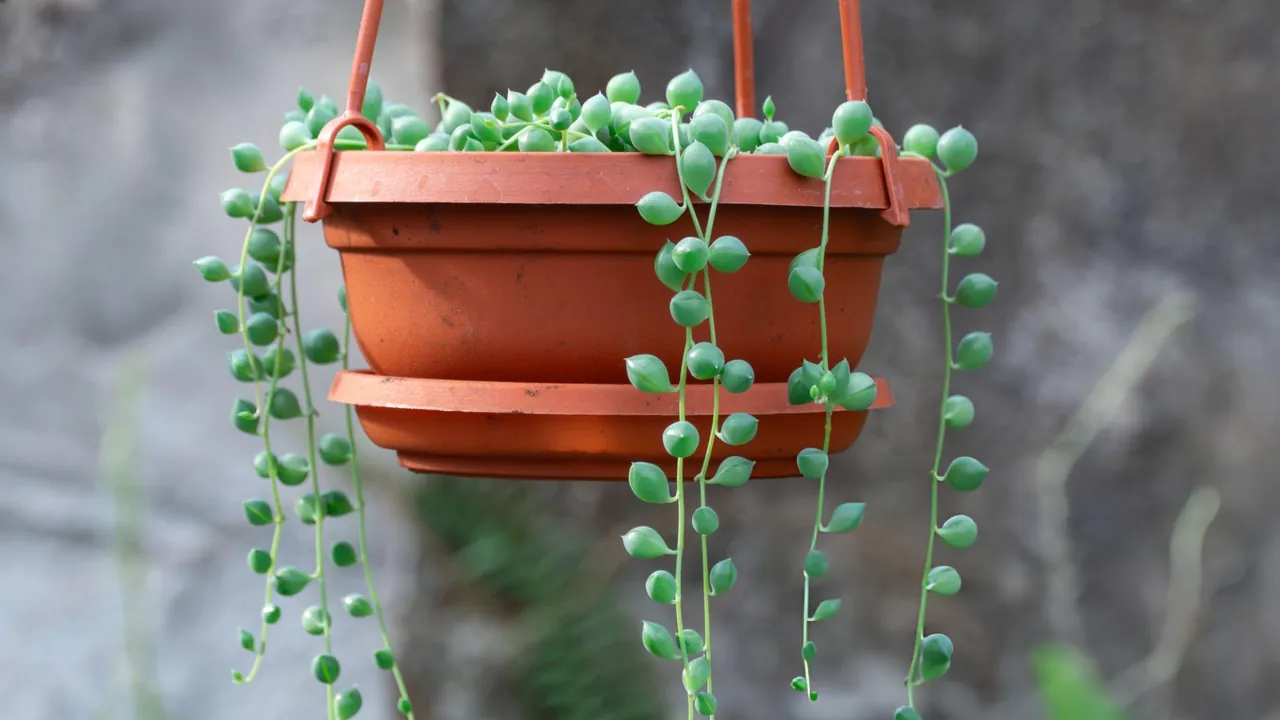
If your string of pearls (Curio rowleyanus, formerly Senecio rowleyanus) is getting leggy at the top, or you just want more of those trailing green spheres for free, you are in luck: this is one of the easiest houseplants to multiply. Quick answer: propagate string of pearls by snipping a few healthy 4 to 5 inch strands, letting the cut ends callus for about a day, then laying them flat on gritty succulent soil with the pearls touching the surface. Roots form at the pearls within 2 to 3 weeks. Water lightly and only when the mix is dry, give the cuttings bright indirect light, and resist fussing. The single biggest mistake is overwatering, because this is a succulent and soggy stems rot fast.
Why string of pearls is so easy to propagate
String of pearls roots readily because each little pearl-shaped leaf sits at or near a node, and nodes are where a succulent stem makes new roots. Lay a strand on damp soil and almost every point of contact becomes a potential rooting site. That is why a single long vine can give you a whole flush of new plantlets rather than one.
It helps to know the plant’s nature. This is a trailing succulent from drier parts of southwest Africa, and like most succulents it stores water in its leaves, those round pearls, and prefers to dry out between drinks. Propagation works with that biology: you are not coaxing a thirsty cutting to stay hydrated in water for weeks, you are letting a drought-adapted stem do what it naturally does, which is sprout roots wherever it meets a bit of moist grit. Keep that in mind and the whole process feels forgiving.
One honest caveat up front: “easy” does not mean “wet.” More string of pearls cuttings die from kindness (too much water) than from neglect. The steps below are built around keeping the stems on the dry side until roots take hold.
What you’ll need
You do not need much. A few simple things set you up for success:
- A healthy parent plant. Take cuttings from firm, plump strands, not shriveled or yellowing ones.
- Clean, sharp scissors or snips. A clean cut heals faster and is less likely to introduce rot.
- Gritty, fast-draining succulent or cactus mix. Drainage is the whole game here. A bagged cactus mix, ideally with extra perlite or pumice stirred in, keeps air around the new roots.
- A shallow pot or the pot the cuttings will live in. Shallow is fine; these roots are not deep.
- A spot with bright, indirect light. No harsh midday sun on tender cuttings.
That is genuinely it. You do not need rooting hormone for a plant this willing, though a light dusting will not hurt if you have it on hand.
Step 1: Take your cuttings
Choose a few of the healthiest-looking strands on the parent plant. The best candidates are firm and plump, with pearls that look full rather than flat or wrinkled. If your plant has gone bare and leggy at the crown, taking cuttings is also a chance to tidy it up and encourage the parent to fill back in.
Cut strands about 4 to 5 inches long using clean, sharp scissors. Snip just below a pearl or node so you have a clean end to work with. You can take several cuttings from one long vine; just make sure each piece has a handful of healthy pearls along its length.
A small detail that matters: note which end of each strand was closer to the roots. That cut end is the one you will want resting on the soil, since stems root most readily from the end and nodes that grew nearest the base. It is not a strict rule, but it nudges the odds in your favor.
If any pearls along the strand are mushy, translucent, or discolored, pinch those off before propagating. You want only firm, healthy tissue going into your new pot.
Step 2: Let the cut ends callus
This step is where soil propagation quietly succeeds or fails, so do not skip it. Set your cuttings aside somewhere dry and out of direct sun for about a day so the cut ends can callus over. A callus is just a dried, sealed scab on the wound, and it makes a real difference: an open, wet cut laid straight onto damp soil is an invitation for rot, while a callused end resists it.
A day is a reasonable rule of thumb. Thin string of pearls stems callus quickly, so you do not need to wait nearly as long as you would for a chunky succulent leaf or a thick cactus pad. If your home is humid and the ends still look fresh after a day, give them a few extra hours; if they look dry and sealed sooner, you are ready.
The one time you can skip callusing is water propagation, covered further down, since there is no damp soil pressing against the fresh wound. For the soil method, though, that single day of patience is the cheapest insurance you have.
Step 3: Lay the strands on gritty soil
Now the satisfying part. Fill your shallow pot with gritty, fast-draining succulent mix and lightly firm the surface. Then lay each callused strand flat on top of the soil so the pearls rest on the surface, arranging them in a loose coil or spiral if you want a full, dense look in one pot.
You have two equally valid options for contact:
- Lay on top. Simply rest the strands on the surface so the pearls touch the soil. Roots will reach down from the points of contact.
- Press in shallowly. Gently press the strand into the mix just enough to seat the pearls and nodes against the soil, without burying the whole stem.
Either way, the goal is contact, not depth. Roots form at the pearls and nodes that touch the soil, so there is no benefit to deep burial and a real risk of rot if you smother the stems. Keep the strands lying along the surface rather than tucked under it.
If the cuttings will not stay put, especially coiled ones, you can pin them down. A few bent paper clips, floral pins, or even tiny rocks laid over the strand hold the pearls in steady contact with the soil while roots establish. This is optional, but it noticeably improves contact and therefore rooting.
Step 4: Water lightly and wait
Here is the rhythm that keeps cuttings alive. After laying the strands down, give the soil a light watering to settle it and add a touch of moisture, then let it approach dryness before watering again. You want the mix lightly moist while roots form, never soggy. Damp, not wet, is the phrase to hold onto.
Because there are no established roots yet to drink up excess moisture, standing-wet soil is exactly where cuttings rot. Check the mix with a finger and water only when the top has dried out. In a fast-draining gritty mix with bright light, that often means a small drink every several days, but let the soil tell you rather than the calendar.
Keep the pot in bright, indirect light during this stage. A spot near an east-facing window, or set back from a brighter south or west window, gives the cuttings the energy to root without the stress of harsh, direct sun baking tender, rootless strands. Avoid deep shade, which slows rooting and tends to produce thin, stretched new growth.
Now wait. Roots typically begin forming at the pearls within 2 to 3 weeks. You usually cannot see them, since they grow down into the mix, so resist the urge to tug the strands and check. Instead, watch the pearls themselves: cuttings that stay plump and firm, and especially ones that start pushing fresh growth, are rooting well.
How to tell it’s working
The clearest early sign is simply that the cuttings stay healthy. Firm, plump pearls that hold their shape week after week tell you the strand is hydrated and not rotting. A little shriveling early on can be normal as the cutting lives off its stored water before roots take over, and it usually plumps back up once roots establish and after a light watering.
The definitive sign is new growth: tiny new pearls or a fresh trailing tip emerging from the strand. That means roots have formed and the plant is feeding itself. Once you see steady new growth, your cuttings have rooted successfully and you can ease into a normal string of pearls watering routine, watering only when the soil dries out.
A gentle test, used sparingly, is the lightest possible tug on a strand after three or four weeks. If it resists slightly, roots have gripped the soil. Be careful, though, because pulling too hard rips out the young roots you are trying to protect, so let visible new growth be your main guide instead.
The water propagation method
You can also root string of pearls in water, and plenty of people do because it is easy to watch the roots appear. The honest assessment: water works, but soil is more reliable for ending up with a sturdy, lasting plant.
To try it, take 4 to 5 inch cuttings as above, then strip the pearls off the bottom inch or so of stem. Rest that bare end in a small glass of water so the stripped stem is submerged but the remaining pearls stay above the waterline, since pearls sitting in water tend to rot. Set the glass in bright, indirect light and refresh the water every few days to keep it clean. Roots often appear within a couple of weeks. You do not need to callus cuttings for the water method.
The catch is the transplant. Roots that grow in water are brittle and adapted to living submerged, so they often struggle when you move the cutting into soil, and some die back and force the plant to grow new soil-suited roots anyway. With the soil method, the roots form in their permanent medium from the start, so there is no awkward transition. If you do start in water, move cuttings to soil while the roots are still short, around an inch long, when they adapt most easily.
In short, water propagation is great for impatience and for seeing progress, while laying cuttings on gritty soil is the steadier path to a thriving plant. Either way, the destination is the same well-draining mix.
Common problems and quick fixes
Most propagation troubles come down to moisture, and reading the pearls tells you which way to adjust.
Shriveling, flattening pearls. Early on, mild shriveling can simply mean the cutting is using up its stored water before roots take over, which is normal. If it persists or worsens, the cutting is genuinely thirsty or has not yet rooted, so give the soil a light watering when it is dry. Firm pearls should return as roots establish.
Mushy, translucent, or yellowing pearls. This is the rot signal, and it almost always traces back to too much water or stems sitting against soggy soil. Back off watering immediately, make sure the pot drains freely, and improve airflow around the cuttings. Remove any mushy pearls or stem sections so the rot does not spread, and let the mix dry out more between drinks.
Nothing happening after several weeks. If cuttings are firm but stubbornly rootless, the usual culprits are too little light, too little soil contact, or a too-cool spot. Move the pot somewhere brighter (still indirect), make sure the pearls are actually touching the mix, and keep it in normal warm room temperatures rather than a chilly corner.
Cuttings rotting at the soil line. This points back to a skipped or insufficient callus, or soil kept too wet. For your next batch, give the cut ends a full day to seal, and keep the mix on the drier side of damp while roots form.
Aftercare once they’ve rooted
Once you see steady new growth, treat your rooted cuttings like any established string of pearls. Water only when the soil has dried out, since this is a succulent that far prefers a missed drink to soggy roots, the same drought-tolerant logic that governs watering a plant like aloe. If you keep aloe too, our guide on how often to water aloe vera plants walks through that same dry-then-soak rhythm in detail.
Keep the new plant in bright, indirect light, in its gritty fast-draining mix, and in a pot with drainage holes. As the strands lengthen, you can let them trail from a hanging pot or a shelf, and you can always tuck stray tips back onto the soil to thicken the plant further. Hold off on fertilizer until the cuttings are clearly established and growing, then feed only lightly during the growing season; rooting cuttings do not need feeding and salts can build up against tender new roots.
If you enjoyed how forgiving this was and want another nearly foolproof project, the snake plant is a great next step. Our walkthrough on how to propagate a snake plant covers a similarly low-effort plant with a couple of useful twists of its own.
The bottom line: snip healthy 4 to 5 inch strands, let the cuts callus for a day, lay them on gritty soil with the pearls touching the surface, water lightly and only when dry, and give them bright indirect light. Roots come in 2 to 3 weeks, rot is the only real risk, and before long you will have more of those trailing pearls than you know what to do with.